Dog Beach Etiquette UK 2026 - 7 Rules
Dog beach etiquette UK 2026: PSPO rules, considerate ownership, off-lead protocols, conflict-free coastal dog ownership.
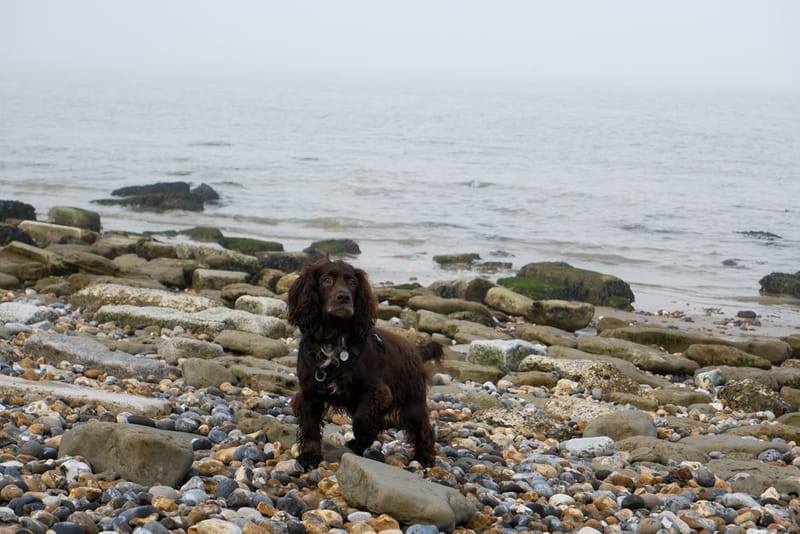
Considerate dog ownership at UK beaches goes beyond following the PSPO restrictions on the sign at the entrance - it's about being a polite ambassador for dog-friendly coastal access. This guide covers the practical etiquette rules that keep dog-allowed beaches dog-allowed.
1. Recall before off-lead
Honest self-assessment.
Off-lead beach access is a privilege - only earn it if your dog has absolute recall.
- Test recall in low-distraction environments first.
- Then test with other dogs visible.
- Then test near children + picnics.
- Then test near seabirds.
- Only then graduate to off-lead beach.
If recall is unreliable:
- Use a long line (5-10m, biothane recommended).
- Keep on standard 1.5m lead in busy areas.
- Continue training - don't give up on off-lead but earn it.
Be honest with yourself:
- Sporadic recall in calm conditions ≠ reliable recall under distraction.
- The cost of an unreliable-recall dog running off: spooked horses + scared children + chased seabirds + chased other dogs + traffic + lost dog.
- An off-lead reliable dog is worth more than a unreliable off-lead dog by a huge margin.
2. Pick up + remove ALL poo
Non-negotiable.
Beach poo etiquette:
- Carry minimum 5 poo bags per dog per beach visit.
- Pick up immediately - not 'on the way back'.
- Bagged poo MUST be removed from the beach + put in a bin.
- NOT buried in sand. NOT left on rocks. NOT hidden behind seaweed.
- Beach poo bins are emptied regularly - use them.
Why this matters:
- Dog faeces transmits Toxocara canis (causes blindness in children).
- Dog faeces toxic to marine ecosystems if washed out.
- 'Buried' poo bags resurface within days as sea + dog erosion exposes them.
- Every uncollected poo is a vote for closing dog access to the beach.
If you spot uncollected:
- Carry spare bags + pick up - even if not your dog.
- Considerate dog ownership culture spreads.
3. Respect other beach users
Not everyone loves dogs.
People who can't engage with strange dogs:
- Children unfamiliar with dogs.
- People with dog phobia.
- People with religious or cultural concerns.
- Older or less mobile people.
- Picnicking groups.
- Swimmers + paddleboarders.
Default behaviour:
- Recall + leash on approaching other beach users.
- Pass at distance unless invited closer.
- If your dog approaches strangers uninvited - apologise + retrieve.
- Don't let dog interactions assume consent from other users.
If your dog approaches another dog uninvited:
- Some dogs are reactive, ill, training-recovering, or simply not interested.
- 'My dog's friendly' doesn't override the other dog's owner's wishes.
- Recall + leash on approaching unknown dogs.
- Wait for explicit 'they can say hello' from the other owner.
4. Marine wildlife + ground-nesting birds
Seasonal sensitivity.
Ground-nesting bird season (March-July):
- Skylarks, lapwings, ringed plovers + others nest on UK beaches + dunes.
- Dogs chasing or even running through nesting areas can fatally injure chicks.
- Always leash near signed bird sanctuary areas.
- RSPB + National Trust signs identify sensitive sections.
Seal pupping (autumn-winter, regional):
- UK has grey + harbour seal populations.
- Pup season starts on west coast September-October.
- Mothers feed pups on beaches - dog interactions can cause abandonment.
- Always keep significant distance + recall to leash.
Beach erosion + dune systems:
- Coastal dune systems fragile.
- Stay on marked paths through dunes.
- Off-path dogs can damage dune-stabilising plants.
5. Check beach signs every visit
Restrictions evolve.
Why this matters:
- Coastal councils review PSPO annually - rules can tighten.
- Some beaches add early-morning + evening exemptions.
- Some beaches add no-dog zones during nesting season.
- National Trust + RSPB sites have their own rules.
Practical:
- Read every beach entrance sign on arrival.
- Note any 'changing tide' restrictions.
- Photograph the sign for reference if confused.
- If in doubt, lead up.
6. Multi-dog parties behave differently
Group energy.
Two-dog dynamics on beaches:
- Two dogs together have higher arousal than either alone.
- Pack behaviour escalates faster.
- Recall reliability lower when peer present.
- Aggression risk slightly higher.
Practical:
- Recall + leash both dogs when approaching others.
- Don't let one dog drift far from owner while focused on the other.
- For three+ dogs: serious group control needed; consider keeping all on leash.
Multi-owner dog parties:
- Coordinate before arrival.
- Don't assume someone else is watching the third dog.
- Group walks need clear ownership-per-dog.
7. Be a polite ambassador
Long-term thinking.
Each considerate dog owner makes future beach access possible.
- Every uncollected poo + chased child + spooked seabird = vote toward closing dogs.
- Every polite recall + careful manoeuvre = vote toward keeping dogs welcome.
- Long-term beach access is contingent on aggregate dog-owner behaviour.
Practical ambassador moves:
- Carry extra poo bags - offer them to others.
- Pick up extra litter when noticed.
- Engage politely with non-dog beach users.
- Train your own dog's recall - publicly visible reliable dogs change perceptions.
- Use marked beach access points - don't cut through private property or dune systems.